
Ad
POSITIVE ENERGY: First-time LL author AT Chavez's biography powered by DOE memories

Published
Modified

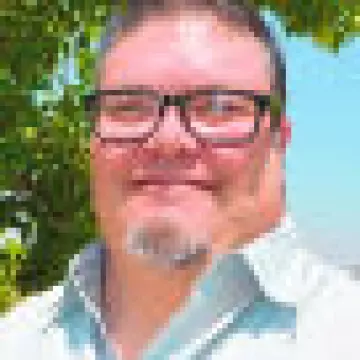
LOS LUNAS — AT Chavez has done plenty in his 66 years on Earth.
AT – short for Anthony Thomas, or Antonio Tomas – works these days as a personal trainer now that he’s retired, working a lot with young Los Lunas athletes.
He once provided security for the Miss South Carolina pageant. He’s traveled the world as a police instructor. He has trained U.S. federal agents.
He was also once a U.S. federal agent himself.
The walls of Chavez’s home gym are covered with mementos from his past, a place he seems most comfortable in.
The gym is attached to his Los Lunas home, which is also very comfy and contains two very cute French bulldogs who will vie for your attention nonstop unless Chavez shoos them away (Which he did, to their disliking).
He said it wasn’t until recently that he decided to share his past work with people outside his home.
“I just started writing again,” he said in a recent interview. “My motivation was to inspire people, you know, people in the community. To go to school, to become something.

“Hopefully, what people get out of the book is to say, “Hey, well, this guy did it… I can do it too.”
Chavez’s biography, “My Life as a United States Federal Agent, Nuclear Materials Courier for the United States Department of Energy,” was recently published by Hawes & Jenkins Publishing.
Ad
The 85-page novella is written from his perspective, growing up in Los Lunas in the 1960s and ‘70s and going from being a federal agent, then a lead agent, and finally as a supervisor before retiring in 2012.
After that, he spent 11 years working as a security and training contractor.
“I decided to write the book because no one has ever written a book about what they did for this type of entity,” Chavez said. “And then being a local guy… I did a very unique job that only a handful of people in the world ever get to do. So that’s pretty prestigious.
“But I really hoped that my story would inspire people, especially kids, to be better than I am, you know. They’re our future. And anything’s possible. (but) no one’s going to give you anything. You’ve got to go get it. But you’re our future. So be somebody. Be our next policeman, Congressman, doctor… be better than I was.”

Chavez’s road to being on the road for the Department of Energy started in Los Lunas.
Growing up, he played baseball, football, and basketball for Los Lunas High School.
After graduating in 1977, he went to New Mexico Highlands University, graduating with a double major in General Business and Spanish.
While at Highlands, he interned for the Department of Energy office in Albuquerque and was hoping to get hired by the DOE after completing his studies. That’s where he hit his first detour.
“I was hoping to get hired by the Department of Energy when I graduated, but in 1982 when I graduated, (President) Reagan put a hiring freeze on the government,” he remembered. “So I enlisted in the Navy.”
During his enlistment, he worked on his master’s degree and got married to his wife, Irene. After the Navy, he said he applied for other federal agencies. But then he realized he still had a security clearance for the Department of Energy.
“And at that time, to become a federal agent, you needed to have military experience, which I did,” he recalled, “and I had a little bit of security experience, and that got me in the door to become an agent for the Department of Energy.”

In 1990, Chavez became a nuclear materials courier. At the time, the DOE’s operations were classified and considered “black-ops” until U.S. Secretary of Energy Hazel O’Leary revealed their existence in the early 1990s.
The main mission of his branch of the DOE was (and still is) to transport and safeguard the nation’s nuclear weapons and nuclear materials for the nation’s nuclear arsenal.
The job is physically demanding, requiring agents to qualify every three months and undergo yearly physicals. Chavez said there’s nothing else like it in the U.S. military or government.

“It’s hard to compare because it’s unique, it’s not like anything else that’s done in the United States,” he said. “We had a lot of guys that were ex-Delta Force, ex-Navy SEALs, Army Rangers, that didn’t make the cut to get into the agency because the requirements were so high,” he said. “It was difficult.
“And so a lot of people didn’t make it. It comes down to performance, you can’t fake performance and endurance.”
Once selected, agents received specialized training from agencies such as the CIA, DEA, and FBI. When on operations, missions were 24/7, with constant travel and rotation of three-person teams in vehicles.
They used advanced technology, including satellite imaging and aerial surveillance, all before civilians had access to those high-tech features. Agents were also scrutinized at all times.

“It was hard because you’re always being tested,” Chavez recalled. “The FBI is doing background checks on you every year. They’re checking about what you’re doing, what your financial status is, or your moral character, you’re ethics – making sure you’re not doing anything that you’re not supposed to see, you’re not blackmailed or coerced by any entities. So it’s very demanding. Very, very demanding.”
The demands of the job were also daily, he said.
“When we weren’t transporting materials, then we were training – we were doing our craft,” he said. “We were training on weapons, we’re doing hand-to-hand, we’re working on radiological things. You’re always training. If you’re not training, you’re traveling, or you’re on leave. That was just the job.”
That constant training could lead to injuries, he said. If it happened during a mission, you were immediately replaced.
“We had a high work standard. If you got injured, you weren’t at the standard and they’d sub you out,” he said .”Back then, we had a Lear jet; they’d fly the new guy out, and you’d be off the job. Because you couldn’t work at 100 percent.. Even with something minor like an ankle sprain.”

Now completed, Chavez’s biography is available to buy on Amazon. He said he hopes to get the book into local libraries and to continue doing presentations in the community.
He also said he may write more about his experiences as well as the experiences of fellow agents – many of whom he still meets with every week.
“I’d like them to tell their story too because everybody’s got a story to tell,” he said. “The thing that unites people in a job like this, like any other special entity, is the hardships that you go through together to get the mission done.
“Yeah. And that’s what makes it unique, and that’s what helps people get a job done because it’s not easy. It’s a bond. It’s a brotherhood and people are tight.”


